


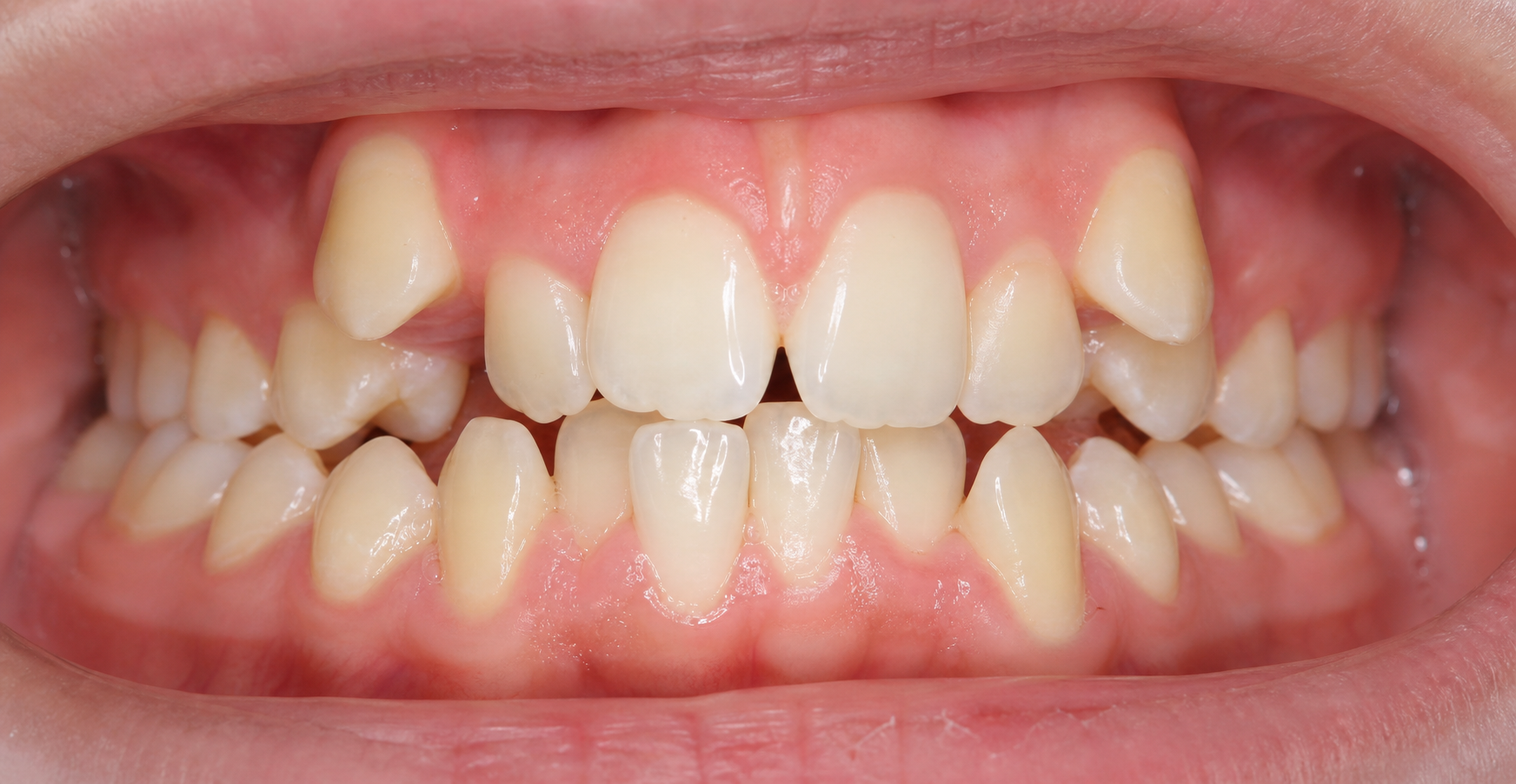
Delaying orthodontic treatment can affect not only appearance, but also speech, chewing, oral hygiene and jaw development. Early examination helps create a more controlled treatment plan.
First orthodontic examination
The period when permanent teeth begin to erupt is important for orthodontic evaluation. Family history, thumb sucking, prolonged bottle use or mouth breathing may require consultation with a dentist.
Effects of delay on oral health
Crowded teeth are harder to clean. Food debris accumulates more easily, and the risk of decay and gum disease may increase. This can lead to more frequent dental treatment needs over time.
Jaw development and bite
Forward, backward or sideways jaw-development problems may require more complex treatments if not addressed. In some advanced cases, orthodontics and surgery may be planned together.
Special cases such as cleft lip and palate
Babies born with cleft lip and palate may need orthodontic follow-up very early. Nutrition, palate shaping and monitoring jaw development require a multidisciplinary approach.